UK ISP Blocking IPTV: The Court Orders Explained
Updated 10 August 2026 · The Section 97A orders, the six named ISPs, and why the stream dies at 3pm on a Saturday
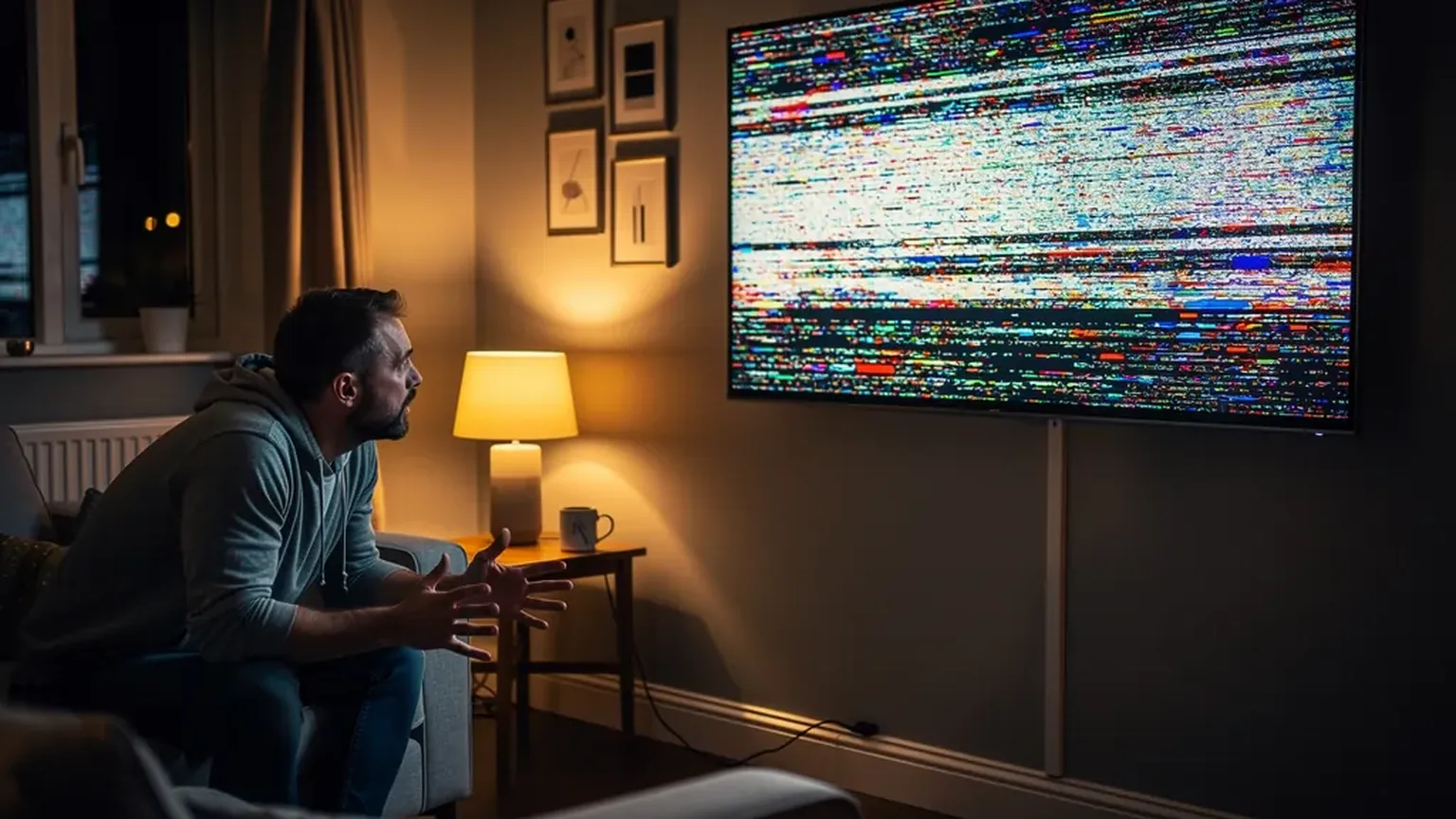
The night that finally made me read the actual court paperwork was a Saturday in March. My stream had been flawless all week. Champions League on the Wednesday, a documentary the night after, not a single stutter. Then 3pm on the Saturday arrived, the teams walked out, and the picture collapsed into a buffering wheel that no amount of app-cache clearing would fix. My broadband speed test said 480 Mbps. The match said otherwise. What I eventually understood, and what this article lays out with the real order details, is that nothing in my house was broken. My ISP was blocking the server, by court order, only while the match was live. It pairs with the match-day buffering guide, which covers the causes you CAN fix at home, because this one is the cause you cannot fix with a new router.
What is a Section 97A blocking order, in plain English?
Section 97A of the Copyright, Designs and Patents Act 1988 gives the High Court power to grant an injunction against an internet service provider where that provider has actual knowledge that someone is using its service to infringe copyright. That is the whole legal engine. The Premier League or Sky gathers evidence of the servers carrying pirated footage, takes it to the High Court, and the court orders the ISPs to block those servers. The ISPs do not volunteer for this and they do not decide the target list. They are named respondents complying with an order.
The detail that matters to you as a viewer is the word dynamic. The original 2017 Premier League order was the UK's first live blocking order, and it was built to move. The target-server list can be reset each match week, so newly identified servers get added and servers that have stopped carrying the streams get removed. And critically, the order only operates while live Premier League match footage is actually being broadcast. Outside the broadcast window the same server addresses are not blocked. That is the entire explanation for the 3pm Saturday collapse followed by the fine-on-Tuesday stream.
Which UK ISPs are on the court order list?
The six names that keep appearing in the orders are BT, EE, Plusnet, Sky Broadband, TalkTalk and Virgin Media. Those six were the named respondents in the original live Premier League blocking action back in March 2017, and they are the same six in Sky's later orders. Between them they cover the overwhelming majority of UK fixed-line broadband homes, which is why so many IPTV users in the UK have a Saturday-afternoon story like mine.
| Provider | Named in PL/Sky orders | What the public record shows |
|---|---|---|
| BT | Yes | Original 2017 six; respondent in Sky's 2023 order |
| EE | Yes | Original 2017 six |
| Plusnet | Yes | Publishes its own help pages confirming PL + Sky orders |
| Sky Broadband | Yes | Original 2017 six; blocks rival-rights servers too |
| TalkTalk | Yes | StreamShield URL blocking plus IP blackholing |
| Virgin Media | Yes | Original 2017 six |
| Vodafone UK | No evidence | Not a respondent to the English PL or Sky orders |
| Three UK | No evidence | Not a respondent to the English PL or Sky orders |
Two cautions on the bottom rows, because the forums get this wrong constantly. Vodafone appearing in blocking news is usually the Irish order: in July 2025 the Irish courts extended a Premier League blocking order covering Vodafone, eir, Virgin Media Ireland and Sky Ireland for the 2025/26 and 2026/27 seasons. That is a different jurisdiction and a different ISP entity. Public sources do not show Vodafone UK or Three UK as respondents to the English Premier League or Sky orders. If your IPTV misbehaves on Three, that is far more likely to be mobile-network traffic management than a Section 97A block.
How the block actually works (and why there is no warning page)
Most people picture a block as a scary "this site is blocked" page. That is not what happens with live-stream blocking, because the target is not a website you visit. The Premier League's order targets streaming-server IP addresses. Your Firestick app quietly asks a server for the video feed, and your ISP simply refuses to carry the traffic to that server's address. From your sofa there is no message at all. What you see is a failed load, a connection timeout, a black screen, or the buffering wheel, which is exactly why so many users spend months blaming their provider or their box.
Public reporting on Sky's enhanced 2024 order lists the actual toolkit the ISPs use: IP blocking, IP-address rerouting, deep-packet-inspection blocking, DNS blocking, URL blocking and IP blackholing. IP blackholing is the bluntest of them: traffic addressed to a notified server IP is simply discarded, thrown into a hole, so the request never reaches the server and no error ever comes back. TalkTalk's implementation has been described as URL blocking through its StreamShield system alongside IP blackholing. Plusnet's DNS blocking only bites when you use Plusnet's own DNS servers, which is why switching a device to a public DNS sometimes changes behaviour on that one network. One thing the public order summaries do NOT confirm is SNI filtering as a named method in the Premier League or Sky orders, whatever the forums claim.
Sky's own order, granted in 2023 (Sky UK Ltd v British Telecommunications plc and others), is even broader than the Premier League's. It covers both dynamic and static blocking of pirate IPTV services, and it lets Sky apply the dynamic blocking at times and for periods Sky chooses, within the order's terms. That order initially ran to the end of November 2023 and has been reviewed and renewed since. Plusnet's own customer help pages confirm a separate Sky blocking order covering live Sky-channel footage that ran until 25 November 2025, and there is no published UK renewal date for that Sky live-channel order after that date. The Premier League order, by contrast, is publicly confirmed to run through the 2025/26 and 2026/27 seasons unless the court orders otherwise.
The Saturday-at-3pm test: what a block feels like from the sofa
This is the part I wish someone had told me before I bought a second Fire TV Stick thinking the first was faulty. A Section 97A live block has a very specific fingerprint, and once you know it you can diagnose it in about two minutes:
- The stream dies around kickoff and recovers after full time. Midweek it is fine.
- Every other app and speed test on the same connection is normal. 480 Mbps down, and still a black screen on the match.
- There is no warning page and no error code, because the server traffic is being discarded, not answered.
- The same stream on mobile data, off your home broadband, suddenly plays. That isolates the fixed-line ISP as the culprit.
- The same stream with a VPN connected plays perfectly, and dies again the moment you disconnect the VPN.
The VPN test is the definitive one, and the user reports are remarkably consistent. A Plusnet customer described moving from BT to Plusnet with identical hardware and watching the IPTV service simply stop loading, then work the instant a VPN was connected and stop again when it was disconnected. A Virgin fibre user on Reddit reported buffering constantly without a VPN and "0 buffering" with Surfshark connected. The mechanism is not mysterious. A VPN encrypts your traffic and routes it to an endpoint your ISP is not blocking, so the server-IP block, the DNS block and the URL block never even see where you are really going. It is the same reason a VPN helps with plain match-night throttling, which I covered alongside the home-network fixes in the buffering guide.
Who the orders and the raids actually target (and what buyers should take from it)
A blocking order is a copyright tool aimed at the servers and the sellers. It is not a ruling about you on your sofa, and UK enforcement has consistently targeted the operators. The clearest recent example is the February 2026 operation by the City of London Police's Police Intellectual Property Crime Unit in Manchester: four arrests, ten IPTV servers seized along with equipment valued at more than £750,000, in an action that began after Sky reported suspicious activity and that disrupted illegal streaming output across the UK. Police said one suspect was believed to have generated more than £3 million in revenue. That is the scale of operation these orders and raids are built to hit.
I wrote the whole enforcement picture up separately in the piece on what UK police IPTV raids mean for buyers, including the FACT warning letters and who actually receives them, so I will not repeat it here. The short version for this article is simple: the blocking orders are about choking the supply, and the raids are about prosecuting the sellers. The practical lesson for a buyer is the same one I keep coming back to. Deal with a service that is still there next month, that you can test before you pay, and that does not evaporate the night its server lands on a match-week block list.
So what can you actually do about it?
Honestly, less than the forums pretend, but more than nothing. You cannot remove your ISP from a court order, and you should not want to be on the wrong end of one. What you can do is understand the mechanics well enough to stop wasting money on the wrong fix. A new router does not beat an IP block. A faster broadband package does not beat an IP block. The two levers that genuinely change the outcome are a VPN, which moves your traffic off the blocked route, and a provider whose infrastructure is resilient enough to keep working while the block lists churn every match week. Cheap oversold sellers vanish the moment their handful of servers land on the list. A service with real capacity and a real support desk treats a block list as routine maintenance, and I have sat through enough Saturday 3pms now to know the difference within about ten minutes of kickoff.
Which brings me to the only pitch I will make in this article, because it is the same one I make in every guide on this site: test before you pay. A 12-month IPTV subscription from this site is $90 (about £70) for the whole year on one device, with the full Sky Sports and TNT Sports lineup, no contract, and a support desk that answers at kickoff, not three days later. But do not take that from me. Take the 24-hour free trial, put it on your own broadband on a live match day, and watch what happens at 3pm on a Saturday. That is the only review of any IPTV service that has ever meant anything, and it is the whole point of the free-trial testing guide. If a provider will not let you run that test, that is your answer, and the full 2026 UK guide goes through what a legitimate-looking service actually looks like.
Run the 3pm Saturday test on your own broadband, free
Take a 24-hour free trial with no credit card. Load it on your Firestick, watch a full live match at real kickoff load on your own ISP, and see for yourself whether the stream holds while the court orders are doing their work. If it stutters, you have paid nothing and learned everything.
Start My 24-Hour Free Trial